Looking at rental property near Joint Base McGuire-Dix-Lakehurst can seem straightforward at first. There is a major military installation nearby, a steady need for housing, and a township with a smaller residential footprint than many surrounding markets. But if you are thinking about buying, leasing, or managing a rental in North Hanover, the details matter. This guide walks you through the basics so you can understand demand, property types, local rules, and the numbers that shape a smart long-term strategy. Let’s dive in.
Why North Hanover Draws Rental Interest
North Hanover Township sits in Burlington County and has an estimated population of 8,102 as of July 1, 2024, according to the U.S. Census QuickFacts profile for North Hanover Township. The same profile shows a 44.7% owner-occupied housing rate, a median gross rent of $2,294, and a median household income of $86,683. Those numbers point to a small housing market with a meaningful rental segment.
A big reason investors watch this area is Joint Base McGuire-Dix-Lakehurst. The official base site says JB MDL spans 42,000 acres, includes more than 42,000 active-duty service members, civilians, and family members, and supports more than 60,000 jobs while generating more than $6.9 billion in annual economic activity. That level of activity makes the base the main long-term driver of housing demand in the area.
JB MDL Demand Is Strong, But Not Simple
It is easy to assume that a large military installation automatically means unlimited off-base rental demand. In reality, the market is more nuanced. The official base site reports a large connected population, but a JB MDL civil engineer fact sheet cited in the research also notes 2,876 housing units on base.
That means some households will look off base, while others will not. If you are evaluating a property, it helps to think in terms of specific renter fit, such as lease length, home size, and commute convenience, rather than assuming every base-affiliated household is a likely tenant.
North Hanover Favors Long-Term Rentals
One of the most important basics in this market is that North Hanover is not set up for short-term rental investing. The township’s 2021 ordinance makes it unlawful to use a dwelling unit as a short-term rental, with the ordinance defining that use by reference to rentals of less than 175 consecutive days. You can review that directly in the North Hanover short-term rental prohibition ordinance.
For most owners, that means the local strategy is clear: focus on long-term leasing, realistic turnover planning, and full compliance with township and state requirements. If you were considering a vacation-rental model or flexible short stays, North Hanover is not the place for that approach.
What Property Types You Are Likely to See
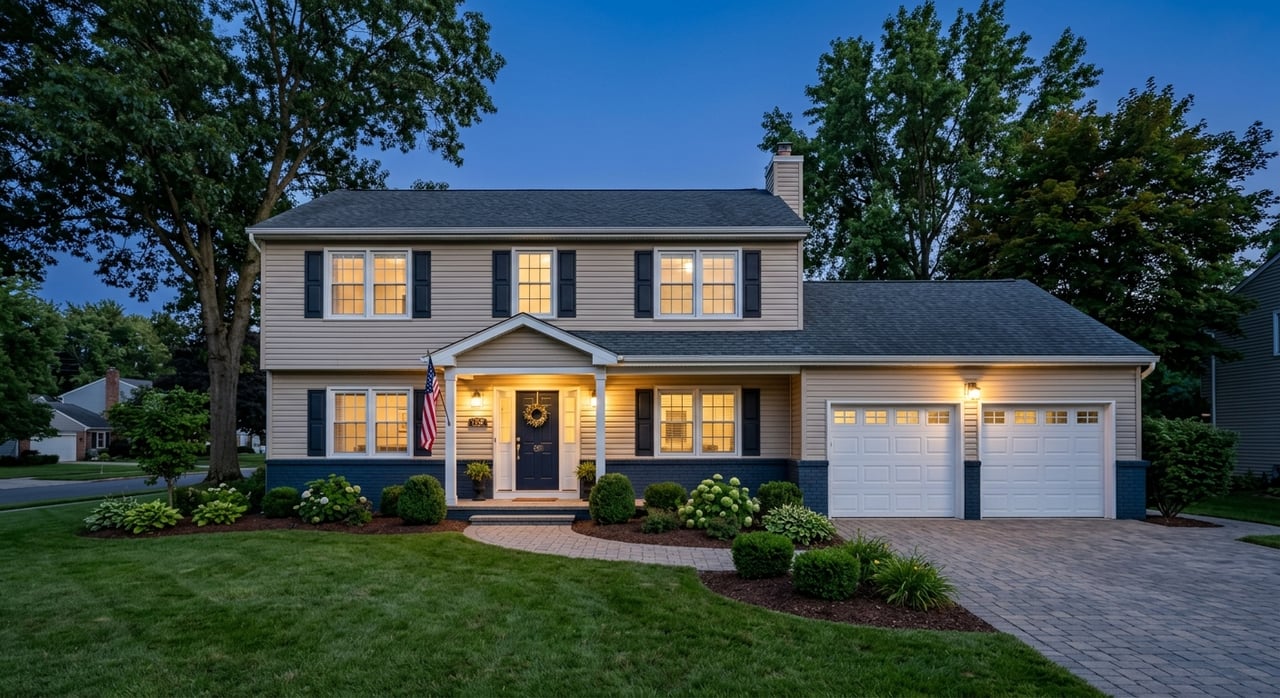
North Hanover’s planning documents suggest a lower-density housing mix than you might find in a more apartment-heavy town. The township’s master plan reexamination report describes redevelopment that replaced older dense military housing with suburban-style neighborhoods that include single-family homes, twin homes, and 4-unit townhome buildings.
That matters because it shapes both tenant expectations and investor math. In this market, you are more likely to be comparing suburban-style homes and smaller multi-unit formats rather than large apartment communities. Maintenance, pricing, and tenant demand can look different when the inventory leans more residential and low-density.
Local Planning Matters More Here
North Hanover’s master plan also says the township wants to remain rural, limit major population increases, and preserve farmland and open space. That suggests a market driven more by steady housing need and base-related demand than by rapid suburban expansion. For investors, that can mean a more stable environment, but not necessarily one built around fast growth.
There is another local factor to keep in mind. The township planning documents reference compatibility with nearby airport and flight operations through APZ and AICUZ planning. In practical terms, location, noise exposure, and land-use compatibility may play a bigger role here than in a typical suburban rental search.
Key Numbers to Watch Before You Buy
If you are underwriting a rental near JB MDL, start with clear and conservative assumptions. Census data shows North Hanover has a median gross rent of $2,294, but that should be a benchmark, not a guarantee for any one property. Your likely rent will depend on the property type, condition, lease terms, and location within the township.
On the expense side, carrying costs deserve close attention. The same Census QuickFacts page shows median owner monthly costs of $2,753 with a mortgage and $885 without one. That is a useful reminder that costs can stay significant even before you add repairs, vacancy, turnover, and compliance expenses.
Core expenses to budget for
When you analyze a potential rental, make room for the recurring items that can change a deal from profitable to tight:
- Mortgage payment
- Property taxes
- Insurance
- Maintenance and repairs
- Vacancy
- Turnover costs
- Compliance-related fees and inspections
If your numbers only work under best-case assumptions, it is worth taking a second look.
Signs of a Stable Tenant Base
The local demographic picture suggests household stability. According to the U.S. Census profile, 29.9% of residents are under 18, 78.4% of people live in the same house they lived in one year earlier, and the average household size is 2.83 persons.
Those figures do not promise future rent growth, but they do suggest a market with a family-leaning profile and lower churn than some transient rental areas. For an owner, that can support a long-term mindset built around consistency, property upkeep, and strong tenant service.
North Hanover Compliance Basics
In North Hanover, rental ownership comes with important local and state requirements. If you are an out-of-area owner, these steps can feel especially time-sensitive.
The township says landlord registration is required under New Jersey law, is free, and must be updated whenever required information changes. The registration form also states that the landlord must provide each tenant a copy within seven days of filing.
Before selling, renting, or leasing residential property, the owner must also obtain a Certificate of Smoke Detector, Carbon Monoxide Alarm and Fire Extinguisher Compliance. The township’s Fire Marshal inspection form lists these fees:
- $35 when requested more than 10 business days before occupancy change
- $70 when requested four to 10 business days before occupancy change
- $125 when requested fewer than four business days before occupancy change
That fee schedule shows why planning ahead matters.
Lead Paint Rules to Know
North Hanover also adopted a 2025 lead-based paint inspection ordinance covering most single-family, two-family, and multiple rental dwellings. Under the 2025 lead-based paint inspection ordinance, an initial inspection is required upon tenant turnover or within two years of the state law’s effective date, followed by inspections every three years or upon turnover.
The ordinance also places responsibility for remediation on the owner and sets a $200 visual inspection fee plus a $20 per-unit fee. If you are comparing investment opportunities, these are exactly the kinds of recurring compliance details that should be part of your budget from day one.
New Jersey Security Deposit Basics
Beyond township rules, state landlord-tenant rules also matter. According to the New Jersey Courts landlord-tenant guidance, security deposits are capped at one-and-a-half months’ rent. Landlords must place the deposit in an interest-bearing account within 30 days, provide written notice to the tenant, and return the deposit within 30 days after move-out.
If that deadline is missed, the tenant may seek double damages in court. For owners managing military-related or relocation-based turnovers, that timeline is especially important to track carefully.
Why Local Management Can Add Value
North Hanover is best understood as a long-term, compliance-heavy, military-influenced rental market. The opportunity is real, but so is the need for organization. Between registration, inspections, turnover timing, and state deposit rules, rental ownership here often benefits from local support and a clear process.
If you live outside the area, or if you expect regular tenant turnover, having the right local real estate guidance can help you make better decisions before you buy and after you close. That includes evaluating property fit, planning around local rules, and setting realistic rent and expense expectations from the start.
If you are considering a rental property purchase or need help with leasing or property management in the North Hanover area, Carla Z Campanella can help you evaluate your options with local insight and practical guidance.
FAQs
What makes North Hanover rental property different from other Burlington County investments?
- North Hanover is shaped heavily by JB MDL demand, long-term leasing rules, lower-density housing, and local compliance requirements such as registration, occupancy certifications, and lead-based paint inspections.
Are short-term rentals allowed in North Hanover Township?
- No. North Hanover prohibits short-term rentals, and the township ordinance applies to rentals of less than 175 consecutive days.
Does JB MDL guarantee off-base tenants for every rental property?
- No. JB MDL creates major housing demand, but the base also has on-base housing, so off-base rental demand depends on the property type, lease terms, and the needs of each household.
What inspections do North Hanover landlords need before renting a property?
- Owners must obtain a Certificate of Smoke Detector, Carbon Monoxide Alarm and Fire Extinguisher Compliance before selling, renting, or leasing residential property, and many rental properties are also subject to lead-based paint inspection requirements.
What is the security deposit limit for New Jersey rental property?
- New Jersey landlord-tenant rules cap the security deposit at one-and-a-half months’ rent and require specific handling, notice, and return timelines.
Is North Hanover better for short-term income or long-term rental strategy?
- Based on township rules and market conditions, North Hanover is better suited to a long-term rental strategy with careful budgeting for compliance, turnover, and ongoing ownership costs.
